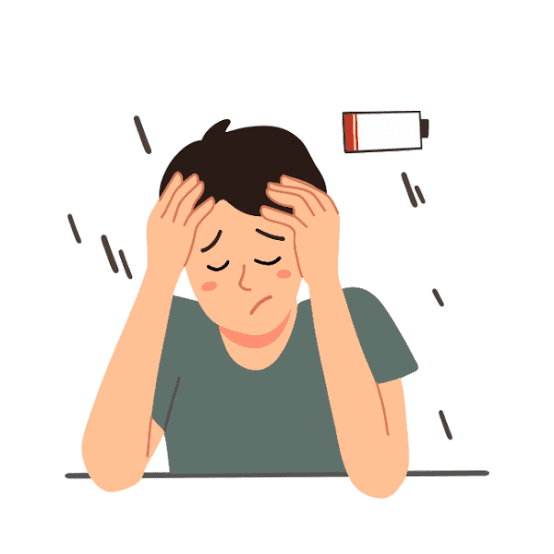

A few years back, I got back home from work one day at 5 pm. I fumbled for my keys, put in the wrong key to turn the lock. It was frustrating as I was ready to drop down the floor at any moment. I looked at the key chain, tried another key, and finally, the door clicked open. I rushed into the house, threw my bag on the dining table, slipped my pumps off, and I crashed onto the bed. I was tired in every cell of my body. It had taken 4 cups of tall Starbucks and Costa Mocha Coffees to keep me going through the day — that’s about 12 shots of espresso and tons of sugar. Each coffee had at least 1–2 packets of sugar going in them. I needed the caffeine and sugar rush to get me through the day without collapsing.
I slept right through the evening, night and woke up at 7:30 am the next day. I didn’t feel refreshed despite sleeping for nearly 14 hours. I was feeling exhausted and suicidal. I had a meeting at 8:30 am, and I forced myself out of my bed, into the shower, praying that I should make it out of the house without jumping off from my balcony. For a few months, this was a ritual. When I got dressed and went out, I realised that I hadn’t locked my apartment door. I hadn’t even closed it. It was open.
That shocked me. My actions were compromising my safety. I lacked the energy even to shut the door properly when I came in.
I wish I could say that this was the last time I ever crashed like that. One other time I hadn’t closed the door because I was exhausted, I woke up in the middle of the night to find my neighbour creeping into the bedroom and touching me. Took many years for me to understand that chronic fatigue sets in during or at the onset of my episodes and some times in between episodes. I was puzzled at the fluctuating energy levels I had through the day — both physical and mental. I would cook an entire meal with a great deal of enthusiasm, and the next moment, I wouldn’t be able to get out of the bed, pull a plate, serve myself food and eat it. There would be days, where I even struggled to pull a blanket over myself because I couldn’t summon enough energy to do it.
What made it challenging to manage was the unpredictability and the extremes of it. As I started to work towards managing my illness, I noticed that the physical exhaustion accompanied the mental exhaustion too. A friend once asked me “What’s the difference a bipolar fatigue and normal fatigue?” I told him, “I don’t know. Maybe I cannot override the energy drop in my physical and mental body. I can’t endure or overcome it.”
I have been slowly working with the fatigue, which seems to be part and parcel of my life at the moment. A few things have worked for me in this space which I have listed below.
STOP ALL ACTIVITY
When I find myself overcome with exhaustion, I stop everything I am doing. There is an urge to distract myself from the fatigue with my phone or laptop. There is an urge to keep pushing through things hoping I will be able to get past this moment. There is also an urge to keep myself busy. When I am in a safe space, which is mostly home for me, and I find myself exhausted, I stop everything, and I lie down. There are all sorts of voices in my head that go, “You can’t afford to rest now, you have so much to do” or “You got 10 hours of sleep last night you shouldn’t be feeling so fatigued, it is your mind playing tricks with you” or “You are not tired, you are simply lazy and procrastinating”. I listen and tell myself, “Maybe all of you are right, but now I really need some quiet, peace and stillness.”
Some times I can get back to whatever I was doing in some time. Other times I would need to rest or sleep for a few hours. Or even the whole day would be wasted with me in bed. I try to accept that this is where I am at the moment, and that’s what I need.
RESTORATIVE MUSIC
There are days when the onslaught of mental activity through the day leaves me drained out mentally. That happens if I have had a stimulating day at work, or a day with back to back activities. On those days when my schedule is jam-packed, and my mind is busy, I try to take a few minutes break and retire to the breakout area at work. I open my trusted Insight Timer app, switch on some binaural beats or restorative music and close my eyes in a relaxed position. Few minutes of stillness, of doing nothing, not even observing my breath, but letting the music wash over me seem to help.
EATING A HEALTHY MEAL
Eating has been a challenge for me all my life. I rarely feel hunger, and I can’t trust my body to tell me when I need food. If I listened to my body, I would go for even two days without food, some times without even a drop in my energy levels which could be either the cause or a trigger for a hypomanic episode. So I didn’t get the opportunity to learn the connection between food, body and energy.
When I am exhausted, I tend to turn to junk food to get my energy level up. It has been a journey to be aware of my junking tendencies and consciously replace it with healthier options. The more I see how healthy food can energise me, the more I find myself making better choices. Some times the exhaustion is simply hunger and the body craving for nutrients. This awareness is not instinctive to me, and I am slowly learning it.
GENTLE PHYSICAL ACTIVITY/MOVEMENT
Physical activity is a hit or a miss for me. There are times when I can summon up some energy to go to my exercise class, and the exercise stimulates me. On some days, I can’t even change into my workout clothes. Restorative Yoga helps, and on days I can go to the studio, I ask my teacher to keep my practice very light. So I do poses and breathing exercises that energise. Sometimes, I go for a walk in a park or in a lane that has a canopy of trees. It helps me to centre and draws my energy back into myself. If I don’t have the will to step out of the house, I have tried a few YouTube Tai Chi videos which have done a decent job of energising me.
GETTING SOME SUN
As I write this, I am becoming aware that my exhaustion is better in summer than in autumn or winter. I am someone who needs the warmth and energy of the sun on an everyday basis. Living in a tropical country like India has its advantages and having the sun all through the year is undoubtedly one of them. Sun is one of my best energisers. I stand in the sun. I take a short walk amongst trees soaking in the sun, or I go up to the terrace and stand out in the sun for a while until I feel ok to get back.
ENERGISER SUPPLEMENTS
Taking Ashwagandha on an everyday basis along with Vitamin D supplements seems to help me to manage my energy levels, especially in the morning. I am not a morning person, and my energy levels tend to be very low until they start peaking up late afternoon. Usually, that would mean, I would be stimulating myself with caffeine or sugar to keep up with the day. Taking these supplements means that I can cut my reliance on caffeine and limit it to a reasonable consumption of 2 cups a day.
THE BARE MINIMUM
On the days I feel fatigued, I don’t push through my usual schedule. I consciously scale down on the number of things I am doing and do absolutely the bare minimum — eat, rest and sleep. Of course, since I work in a corporate environment, there is no getting away from work. I cut down on my activities in a day, get through the absolute minimum. It meant that I had to say no frequently to responsibilities that would mean I had to stretch myself. Of course, this does have an impact on my career, but I made a conscious choice to do it so that I don’t end up burning out. The times I plough through the day, I pay the price for it with my body and mind giving up.
Fluctuating and unpredictable energy levels are challenging to manage. My beliefs around habits, productivity, identity, should-haves and must-haves added another layer of challenge in accepting and managing chronic fatigue. Managing this meant I had to be aware of my beliefs, accept them for what they were and take actions to change the beliefs if they weren’t working for me. The more flexible I became in my mind, the easier it started to become to manage the fatigue.