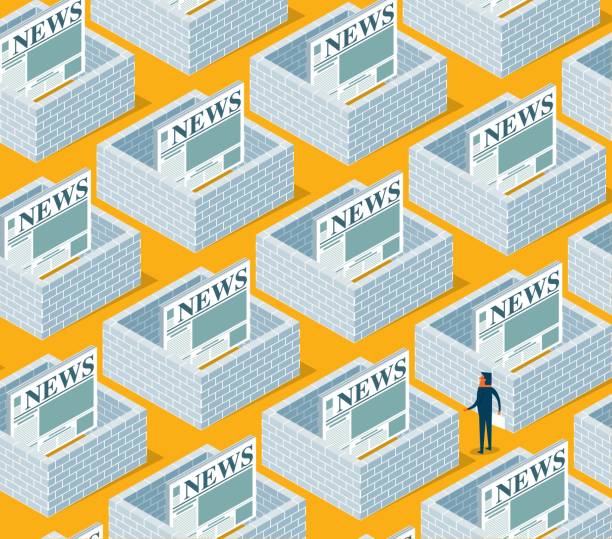

In today’s world, where information is abundant and accessible, it is crucial to be able to distinguish between biased and unbiased news sources. Biased sources are those that present facts, opinions, or narratives in a way that favors a certain political, ideological, or personal agenda. The best unbiased news sources are those that strive to report facts and events objectively, without distortion or manipulation.
Why is Unbiased News Important?
Unbiased news is important for several reasons. First, it helps us to form our own opinions and judgments based on reliable and accurate information, rather than being influenced by someone else’s agenda. Second, it fosters a healthy and respectful public discourse, where different perspectives and viewpoints can be heard and debated. Third, it promotes a democratic and accountable society, where the media can serve as a watchdog and a check on the power and actions of governments, corporations, and other institutions and deter fake news.
How to Identify Media Bias
Differentiating between biased and unbiased reporting can be challenging, especially when some outlets are subtle or sophisticated in their bias. However, there are some tell-tale signs that can help us to spot political bias in news media.
Headlines And Language
Biased sources often use sensational, emotional, or misleading headlines and language to attract attention and influence the reader’s perception of the story. For example, a biased headline might use words like “shocking”, “outrageous”, “scandalous”, or “exposed” to create a negative impression of a person or an issue. Unbiased news sources, on the other hand, use neutral, factual, and descriptive headlines and language to convey the main points of the story.
Sources and Evidence
Biased sources often rely on anonymous, unverified, or selective sources and evidence to support their claims or opinions. For example, a biased source might quote an unnamed “insider”, a “former official”, or a “close friend” of a person or an organization, without providing any details or context about their credibility, motivation, or affiliation. Unbiased sources, on the other hand, use transparent, verified, and diverse sources and evidence to back up their facts and arguments.
Balance and Fairness
Biased sources often present only one side of a story, or give more weight or attention to one side over the other. For example, a biased source might omit, ignore, or dismiss relevant facts, opinions, or important perspectives that contradict or challenge their own. Unbiased sources, on the other hand, present both or multiple sides of a story, or give equal weight or attention to each side.
Context and Analysis
Biased sources often lack context and analysis, or provide misleading or inaccurate context and analysis, to shape the reader’s understanding of the story. For example, a biased source might use cherry-picked, outdated, or irrelevant data, or make false or illogical comparisons, to support or undermine a certain point of view. Unbiased sources, on the other hand, provide sufficient and accurate context and analysis, to help the reader make sense of the story.
Media Bias Charts
A media bias chart is a visual tool that aims to show the alignments on the political spectrum and separate bias ratings of various sources. They are helpful in differentiating between biased and unbiased news sources because they can help users to:
Identify the ideological perspective of a source, such as left, right, or center.
Compare and contrast different sources on the same topic or issue.
Evaluate the quality and reliability of a source, such as factual, mixed, or unreliable.
Seek out diverse and balanced sources of information that challenge one’s own views and assumptions.
However, media bias charts are not perfect or objective, and they may have their own partisan bias or limitations. Users should also be critical and skeptical of the methods and criteria used to create and rate the sources on the charts. Users should also fact check the information they get from any source with other sources and evidence.
What Are Some Examples of Biased and Unbiased News Sources?
To illustrate the difference between biased and unbiased news sources, let us look at some examples of how they cover the same story. The story is about the nuclear fusion experiment by South Korea, which achieved a record-breaking temperature and duration for a fusion reaction.
Bias News Articles
A biased source might have a headline like this: “South Korea’s nuclear fusion breakthrough sparks fears of a new arms race”. The headline implies that the experiment is dangerous and threatening, and uses the word “sparks” to suggest a causal link between the experiment and the potential conflict. The article might use sources and evidence that are critical or skeptical of the experiment, such as anti-nuclear activists, rival countries, or conspiracy theorists. It might present only the negative or controversial issues of the experiment, such as the risks, costs, or challenges, and ignore or downplay the positive or beneficial aspects, such as the scientific, environmental, or economic implications.
Unbiased News Articles
An unbiased news source might have a headline like this: “South Korea achieves a milestone in nuclear fusion research”. The headline states the fact and the significance of the experiment, without implying any judgment or opinion. The article might use sources and evidence that are credible and diverse, such as the scientists involved in the experiment, independent experts, or international organizations. It might present both the positive and negative aspects of the experiment, such as the achievements, challenges, opportunities, or limitations, and explain why they matter.
What Are the Most Biased News Sources?
Fox News Bias
Fox News channel is one of the most popular conservative news sources accused of being biased in favor of the Republican Party and conservative causes. The accusations stem from the idea that Fox often selects stories that portray Democrats and liberals negatively, while highlighting the achievements and views of Republicans and conservatives and employs hosts, staff members, and guests who express strong opinions and criticisms of the left side of the political spectrum.
CNN Bias
CNN is a cable and online outlet that has been accused of being biased in favor of the Democratic Party and liberal causes. The accusations stem from the idea that CNN often covers stories that favor the Democratic Party and progressive causes, while criticizing or ignoring the Republican Party and conservative causes and features hosts and guests who express strong opinions and attacks against the right side of political leanings.
What Are Some Unbiased News Source Recommendations?
There are many outlets that claim to be unbiased, but there is no such thing as a completely unbiased source. Here are some outlets and free newsletters that have been rated as unbiased or relatively bias free news articles by various media bias charts or ratings.
Early Chirp
Early Chirp is a free daily newsletter subscription that curates entertaining and informative news stories every morning directly into your inbox, with a goal to make reading the news enjoyable. On of the best free newsletters, Early Chirp provides a daily news subscription free to use and states that its mission is to provide a fresh and fun perspective, and that it strives to be accurate, fair, and transparent. Early Chirp Newsletter also has social media platforms that post the most relevant and important updates from its free news subscription.
Associated Press
The Associated Press is a global agency that provides factual and comprehensive coverage of breaking news coverage, current events, and foreign affairs, with a focus on accuracy, balance, and objectivity. The AP claims to uphold the highest standards of ethical journalism and follows a set of principles and practices that guide its reporting for United States and world news.
The Financial Times
The Financial Times is a British newspaper that covers business, economic issues, politics, and culture, with a reputation for authoritative and independent journalism. The FT states that its mission is to deliver trusted information and analysis that helps its readers make informed decisions, and that it strives to maintain editorial integrity, fairness, and accuracy.
The Bureau of Investigative Journalism
The Bureau of Investigative Journalism is a non-profit news organization that produces in-depth and public interest journalism, with a commitment to accuracy, fairness, and transparency. The Bureau states that its aim is to expose wrongdoing, challenge power, and spark change, and that it follows the highest ethical and professional standards of journalism.
Pew Research Center
Pew Research Center is a non-partisan think tank that conducts research and analysis on various topics, such as politics, media, social issues, and public opinion content, with a focus on rigor, impartiality, and quality. Pew states that its mission is to inform the public, policymakers, and other stakeholders about the important issues, attitudes, and trends shaping the world, and that it follows the highest standards of scientific inquiry and data collection.
Biased vs. Unbiased News Sources
Biased information can distort our perception of reality and create an echo chamber of opinions that influence our decisions. Therefore, it is important to be able to identify and steer clear of biased sources, and seek out unbiased news sources instead. By paying attention to the headlines, language, sources, evidence, balance, fairness, context, and analysis of the news, we can spot the signs of bias and evaluate the quality and credibility of the news. By reading from multiple and diverse sources, we can get a balanced and unbiased view of the world. Unbiased journalism can inform, educate, and empower us to make informed and rational decisions, and foster a healthy and respectful public discourse.