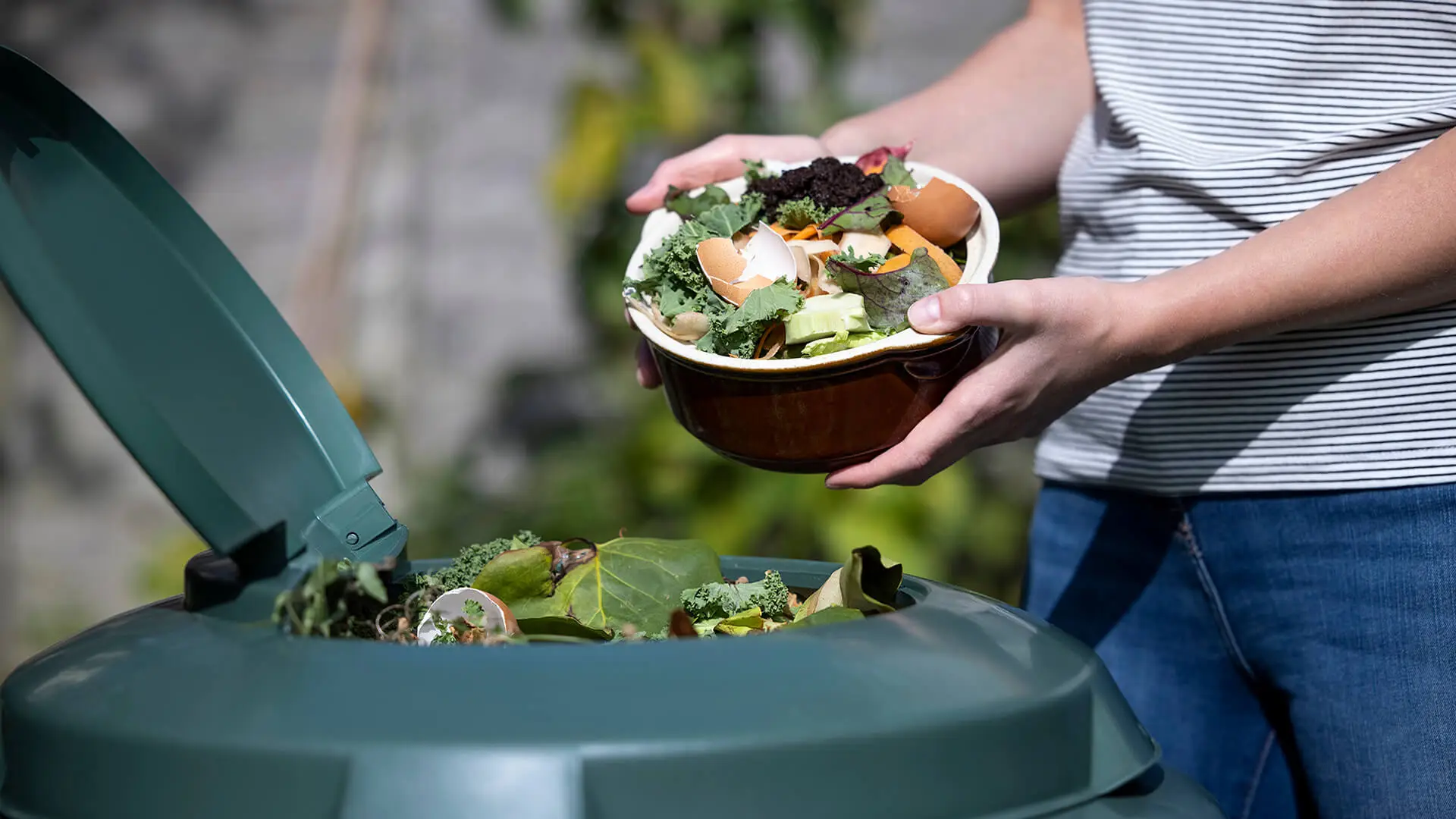
Let’s be honest: the word “compost” usually brings to mind images of a steaming pile of garden waste, swarms of fruit flies, and a smell that would make a trash collector flinch. If you’re living in a modern apartment or a suburban home where you value your kitchen’s “nest” aesthetic, that image is a total deal-breaker.
But here is the reality: nearly 30% of what we throw away is food scraps and yard waste. When that stuff ends up in a landfill, it doesn’t just turn into dirt; it produces methane, a greenhouse gas far more potent than $CO_2$. At DailyNest, we’re all about making sustainability feel like a luxury, not a chore. If you want to turn your onion peels into “black gold” for your houseplants without the mess, here is the lazy person’s guide to indoor composting.
1. The “Bokashi” Bucket: The Apartment Dweller’s Secret
If you don’t have a backyard, the Bokashi method is your new best friend. Unlike traditional composting, which is an aerobic (air-breathing) process, Bokashi is anaerobic (fermentation).
You use a specialized airtight bucket and a handful of “Bokashi bran” (sawdust or grain infused with beneficial microbes). Every time you add food scraps, you sprinkle a little bran on top and mash it down to remove air.
-
The Big Win: Because the bucket is airtight, there is zero smell.
-
The “Everything” Bin: Unlike outdoor piles, you can actually put meat, bones, and dairy into a Bokashi bin. The microbes ferment them so they don’t rot.
-
The Liquid Gold: These buckets have a spigot at the bottom. Every few days, you drain the “Bokashi tea.” This liquid is packed with nutrients. Dilute it with water, and your indoor Pothos or Monsteras will grow like they’re on steroids.
2. The Freezer Hack: Zero Effort, Zero Flies
If the idea of a bucket on your counter still feels like too much, start with the freezer. This is the ultimate “lazy” entry point.
Keep a large, reusable silicone bag or a plastic tub in your freezer. Every time you prep dinner, toss the ends of your carrots, the shells of your eggs, and your coffee grounds into the bag.
-
Why it works: Freezing the scraps breaks down the cell walls of the plants, which actually speeds up the composting process later. Most importantly, it completely eliminates the possibility of fruit flies or odors.
-
The Routine: Once the bag is full, you can drop it off at a local community garden or a farmers’ market collection point. You get all the “Green Living” karma points with none of the maintenance.
3. Vermicomposting: Meet Your New Silent Roommates
If you’re a bit more adventurous, you can start a worm bin. Don’t worry—Red Wiggler worms are the “introverts” of the pet world. They stay in the dark, they don’t make noise, and they are incredibly efficient at eating your trash.
A well-managed worm bin smells like a fresh forest floor. You feed them your veggie scraps and shredded newspaper, and they produce castings—the most nutrient-dense fertilizer on the planet. It’s a closed-loop system that fits perfectly under a kitchen sink.
4. What Actually Goes In? (The “Nesting” Checklist)
To keep your indoor compost from becoming a disaster, you need to know the “No-Go” list for traditional indoor bins:
-
YES: Fruit peels, veggie scraps, coffee grounds (and filters!), eggshells, and plain cardboard.
-
NO: Oily foods, heavy spices (like hot peppers), or pet waste.
-
PRO TIP: Chop your scraps into smaller pieces. The more surface area the microbes (or worms) have to work with, the faster your waste disappears.
Leave a Reply