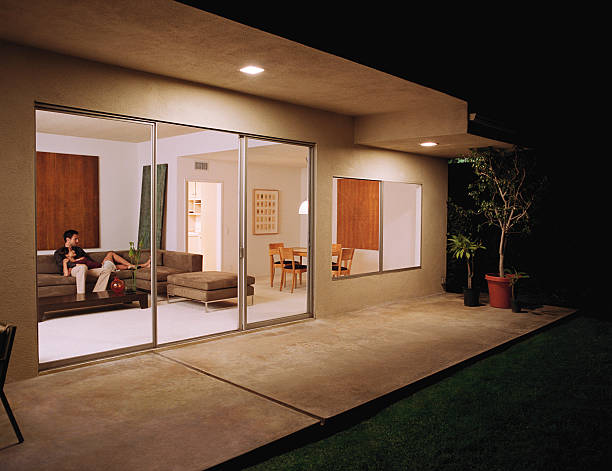
I have a very specific ritual every time I leave for a vacation. I load the car, I lock the front door, I back out of the driveway, and then, exactly three miles down the road, my brain decides to ask me a question:
“Are you absolutely, 100% sure you locked the back sliding door?”
The answer is always yes. I know I did. I remember doing it. But the seed of doubt is planted, and suddenly I’m visualizing a cartoon burglar walking right into my kitchen and making himself a sandwich.
Home security is a massive industry designed to monetize that exact anxiety. If you listen to the ads, you need a monitored system with twenty cameras, motion sensors, glass-break detectors, and a monthly subscription fee that rivals your car payment. And look, if you have the budget for a digital fortress, go for it. Peace of mind is priceless.
But for the rest of us—who just want to go to the beach for a week without spending our souvenir money on surveillance equipment—there is a better way. You don’t need to turn your home into Fort Knox; you just need to make it slightly more annoying to break into than the house two doors down.
Here is how I keep my place safe on a budget, and how I stop the intrusive thoughts from ruining my margarita time.
The “Social Media Blackout” (The Hardest Step)
Let’s get the painful one out of the way first. We live in an era where if you didn’t post a picture of your airport Starbucks cup, did you even go on a trip?
Here is the harsh reality: Posting in real-time is the modern equivalent of leaving your front door wide open with a “Welcome” mat. You are broadcasting to the world—and specifically to anyone who might be watching your digital footprint—that your house is empty.
I have a strict rule called “Post-Cation.” I take a million photos while I’m away, but nothing goes on Instagram or Facebook until I am physically back inside my house. It requires some serious self-control, but it’s the single most effective security measure you can take, and it costs zero dollars. Plus, your friends will still be jealous of your beach photos on a Tuesday, even if you took them last Saturday.
The “Lived-In” Illusion
Burglars are generally opportunists. They aren’t looking for a challenge; they are looking for an empty house. Your job is to gaslight them into thinking you are home, watching Netflix, and eating popcorn.
The Lighting Upgrade: Old-school mechanical timers are dead giveaways because they are too perfect. If your living room lamp turns on at exactly 7:03 PM every single night, it looks automated.
Spend the $20 on a pack of smart plugs (I use Kasa, but any brand works). Most of them have an “Away Mode” or “Randomize” setting. This randomly toggles the lights on and off within a specific window, mimicking natural human behavior.
The Noise Factor: Silence is a dead giveaway. If I’m gone for a shorter trip, I sometimes plug a cheap radio into one of those smart plugs and leave it tuned to a talk radio station. Nothing scares off a potential intruder like the faint sound of a heated political debate coming from the kitchen.
The $3 Hardware Hack
Sliding glass doors are the Achilles’ heel of home security. The locks that come with them are often flimsy latches that can be jiggled open or simply lifted off the track.
You don’t need a locksmith. You need a stick.
Go to your local hardware store, buy a wooden dowel or a piece of PVC pipe, and cut it to the exact length of your door track. Drop it in the bottom track. That door is now physically impossible to slide open unless the glass is shattered. It is the most low-tech, high-security device in existence. I sleep better in hotels just knowing that stick is doing its job at home.
The “Neighbor Economy”
This relies on you actually knowing your neighbors, which I know can be a big ask these days. But a good relationship with a neighbor is worth ten security cameras.
The biggest signal that a house is empty is a driveway that stays empty for days, or a trash can that sits at the curb two days after pickup.
I have a deal with my neighbor: when I’m gone, he parks one of his cars in my driveway. It frees up space for him, and it makes my house look occupied. I also ask him to grab any flyers or menus that get stuck in my doorframe (another classic burglar signal). In exchange, I bring him a six-pack of beer or some fancy chocolate from wherever I traveled. It’s a cheap price to pay for security.
Reinforce Your Strike Plate
This is a slightly more “handyman” tip, but anyone can do it. Go look at your front door. Open it and look at the metal plate on the doorframe where the deadbolt enters.
Most builders install these with tiny, half-inch screws. If someone were to kick your door, those screws would rip right out of the soft wood frame.
Go to the store and buy 3-inch screws. Swap out the tiny ones for the long ones. These will bite deep into the actual stud of the house, not just the trim. It turns a door that can be kicked in with one try into a door that will withstand a battering ram. Total cost? About $1.50.
The Mail Pile-Up
Nothing screams “rob me” like an Amazon package bleaching in the sun on your porch for four days straight.
Before I leave, I do a quick audit of my pending deliveries. If something is scheduled to arrive while I’m gone, I either cancel the order or have it shipped to an Amazon Locker. For regular mail, the USPS “Hold Mail” request takes about 90 seconds to fill out online. It stops your mailbox from overflowing, which is the universal sign for “nobody is home.”
Permission to Relax
The goal of all this isn’t to make your house impenetrable. If someone wants to get in bad enough, they will. The goal is to make your house look like too much trouble.
Burglars are like electricity; they follow the path of least resistance. If your lights are on, there’s a car in the driveway, and the sliding door has a stick in it, they are going to keep walking.
So, put the stick in the door, schedule your smart plugs, and for the love of everything, stop checking your doorbell camera app every ten minutes. You’re on vacation. Act like it.
Leave a Reply