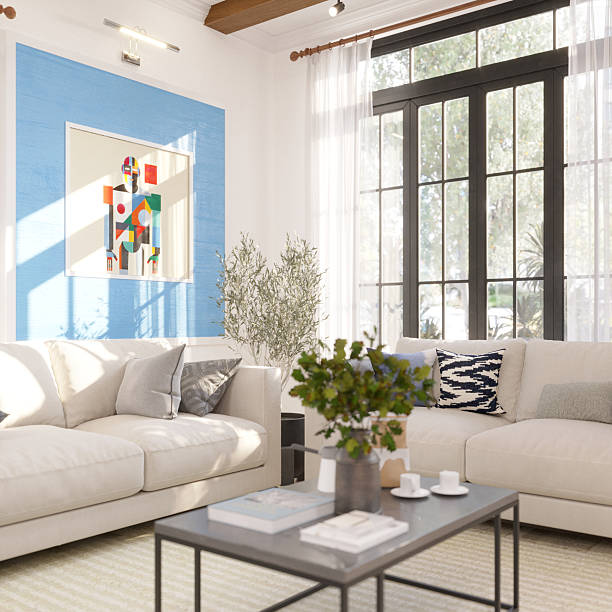
We’ve all been there: you walk into your living room after a long day, ready to decompress, but instead of feeling a wave of relief, you feel a strange, buzzing sense of agitation. You look around, and while nothing is technically “wrong,” the room feels loud. It feels heavy.
The truth is, our living rooms often become the “catch-all” for our lives. We accumulate gifts we don’t like, trends that have soured, and “stuff” that we think makes a room look finished but actually just makes it feel crowded. If you want a space that actually lowers your cortisol levels, you don’t necessarily need to buy more—you need to subtract.
Here are 10 decor items you should consider removing to reclaim the calm in your living room.
1. The “Too Many” Throw Pillows
There is a fine line between “cozy” and “a mountain of fabric I have to move just to sit down.” If your sofa requires a five-minute excavation process before you can watch a movie, you have too many pillows.
From a psychological standpoint, visual clutter is mental clutter. When every square inch of seating is covered in different patterns, textures, and tassels, your eyes never get a chance to rest.
-
The Fix: Limit yourself to two or three high-quality pillows per sofa. Choose soft, breathable fabrics like linen or cotton in muted tones.
2. Aggressive “Word Art”
We’ve all seen them: the giant wooden letters telling us to “LIVE, LAUGH, LOVE” or “GATHER” or “EAT.” While the sentiment is lovely, having literal instructions on your walls can feel surprisingly demanding.
When you see a word, your brain automatically processes it. It’s “reading” your decor rather than experiencing the atmosphere. A calm room should evoke a feeling through colour and light, not through a command printed in cursive on a piece of reclaimed barn wood.
-
The Fix: Replace text-heavy signs with abstract art, a landscape, or even a blank, textured canvas. Let the room’s vibe tell the story, not the literal words.
3. The “Jungle” of Half-Dead Plants
I love a good indoor jungle as much as the next person, but there is nothing relaxing about a crispy fiddle-leaf fig or a spider plant that’s more brown than green.
Plants are supposed to bring life and oxygen into a space. When they are struggling, they become a visual “to-do” list. Every time you look at that drooping leaf, you feel a micro-hit of guilt. “I should water that. Do I need more fertilizer? Why am I failing this fern?” That is the opposite of calm.
-
The Fix: If you can’t keep it thriving, let it go. Stick to two or three hardy plants (like a Snake Plant or Pothos) that look lush and healthy.
4. Tiny Knick-Knacks (The “Dust Collector” Brigade)
We often feel the need to fill every shelf, mantle, and side table with small figurines, travel souvenirs, or little glass birds. Individually, they might be cute. Collectively, they create a “noisy” environment.
Small objects break up the visual flow of a room. Your eye jumps from the tiny brass bell to the porcelain cat to the souvenir rock, and that constant jumping prevents the brain from relaxing into the space. Plus, they are a nightmare to dust.
-
The Fix: Follow the “Rule of Three” or the “Rule of Thumb.” Use fewer, larger items. One large, beautiful vase has more calming power than fifteen tiny trinkets.
5. Harsh, Overhead “Big Lights”
There is a reason the “Don’t turn on the big light” meme went viral. Standard overhead lighting is often cold, clinical, and aggressive. It flattens the room and highlights every speck of dust and imperfection.
To create a sanctuary, you need layers of light that mimic the warmth of a sunset. If your primary light source is a ceiling fixture with a “daylight” bulb, your nervous system is going to stay in “work mode.”
-
The Fix: Use floor lamps, table lamps, and even candles. Aim for “warm white” bulbs (around 2700K) to create a soft, amber glow that signals to your brain that the day is done.
6. Over-Patterned, High-Contrast Rugs
A rug is the foundation of a room. If that foundation is a high-contrast, zig-zag chevron or an incredibly busy geometric pattern in neon colours, the whole room will feel unstable.
Bold patterns demand attention. In a space meant for relaxation, you want the floor to “recede.” A loud rug pulls the floor toward you, making the room feel smaller and more chaotic.
-
The Free Fix: Swap the busy rug for something tonal, textured, or solid. A jute rug or a low-pile wool rug in a soft heather grey or sand colour can instantly “ground” the space.
7. The “Museum” of Old Magazines and Catalogs
We tell ourselves we’ll finish that New Yorker article or find a recipe in that 2022 Better Homes & Gardens, but usually, these piles just sit on the coffee table gathering dust.
Stashed piles of paper represent “unfinished business.” They are a physical manifestation of information overload.
-
The Fix: If you haven’t looked at it in a month, recycle it. Keep the coffee table clear of everything except maybe one beautiful art book. The empty space is a gift to your eyes.
8. Excessive Tech and Tangled Cords
The living room is often our entertainment hub, which means gaming consoles, routers, soundbars, and chargers. But a “snake pit” of black cables trailing down the wall is a visual stressor.
Beyond the cords, having too many screens or blinking LED lights makes the room feel like a laboratory rather than a lounge.
-
The Fix: Invest in a simple cord management box or use Velcro ties to hide cables behind furniture legs. If you have gadgets you don’t use daily, tuck them into a drawer.
9. Heavy, Blackout Drapes (in the Daytime)
While privacy is important, living in a dark cave during the day can dampen your mood. Heavy, velvet, or dark-colored drapes can make a living room feel claustrophobic and stagnant.
Natural light is one of the most effective tools for regulating our circadian rhythms and boosting our mood. If your window treatments are blocking that light even when they’re open, they’re doing you a disservice.
-
The Fix: Switch to sheer or light-filtering curtains. They provide privacy while allowing a soft, diffused light to fill the room, making it feel airy and expansive.
10. Furniture That Doesn’t Fit
This is the hardest one to remove because it’s usually the most expensive. However, a coffee table that is too large for the rug, or a massive sectional that blocks the natural “flow” of traffic, creates physical tension.
If you have to turn sideways to walk past a chair, or if you’re constantly bumping your shin on a table corner, your environment is literally attacking you.
-
The Fix: Sometimes, the best decor move is to move a piece of furniture to another room—or sell it. A smaller, appropriately scaled chair will make the room feel twice as large and ten times more peaceful.
The “Calm Room” Summary Table
Final Thoughts
Creating a calmer living room isn’t about achieving a “minimalist” aesthetic that looks like a cold hotel lobby. It’s about removing the things that compete for your attention so that the things you truly love—the family photos, the comfortable chair, the view out the window—can shine.
Start small. Take one box, walk through your living room, and pull out five things that don’t bring you peace. I bet you won’t even miss them by tomorrow.
Leave a Reply