We’ve all been there: the first sweltering day of the year hits, you triumphantly click the “Cool” button on the remote, and instead of a crisp mountain breeze, you get a pathetic puff of lukewarm air that smells faintly of a damp basement.
It’s a heart-sinking moment. Your first thought is usually, “Great, there goes $500 for a technician.” But before you pick up the phone, take a look at the unit itself. Most of the time, an air conditioner isn’t “broken”—it’s just suffocating.
Think of your AC like a pair of lungs. Over the months, it inhales dust, pet hair, pollen, and skin cells. When those “lungs” get clogged, the machine has to work twice as hard to do half the job. Not only does this spike your electricity bill, but it also wears out the motor years before its time.
Deep cleaning your AC—specifically a split-system or a window unit—is a project you can absolutely tackle yourself in an afternoon. Here are five simple steps to get your unit breathing clearly again.
Safety First: The Golden Rule
Before we touch a single screw, turn off the power. Don’t just turn it off with the remote. Go to the wall switch or, if it’s a window unit, unplug it completely. If you’re dealing with a central air condenser outside, flip the shut-off switch in the outdoor box. We’re going to be using liquids around electrical components, and “Safety First” isn’t just a slogan here—it’s a requirement.
Step 1: The First Line of Defense (The Filters)
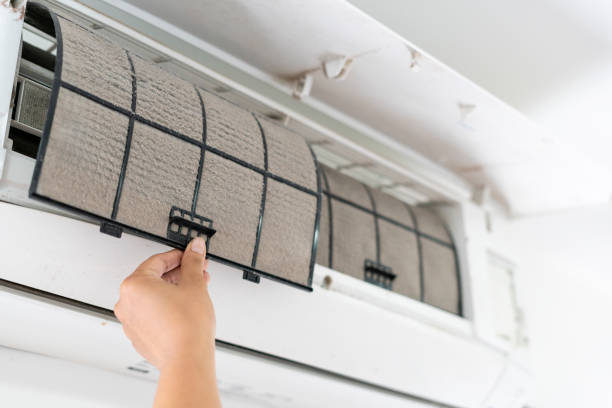
This is the easiest step, yet it’s the one 90% of people neglect. Most indoor units have a front panel that pops open with a gentle tug. Behind it, you’ll find two mesh screens. These are your primary filters.
If you haven’t cleaned them in a year, they likely look like a dryer lint trap. This layer of dust blocks airflow, forcing the coils to get colder and colder, which can actually cause the unit to freeze into a block of ice.
-
The Deep Clean: Don’t just shake them out. Take them to the sink or outside and spray them with lukewarm water. If they’re greasy (common in kitchen-adjacent living rooms), use a drop of mild dish soap and a soft brush.
-
The Pro Tip: Let them air dry completely before putting them back. Putting damp filters back into a dark machine is an open invitation for mold to start a colony.
Step 2: The Heart of the Machine (The Evaporator Coils)
Once the filters are out, you’ll see a series of metal fins. These are the evaporator coils. This is where the magic happens—the refrigerant inside these coils absorbs the heat from your room.
If these fins are coated in a fine film of dust, the heat can’t transfer efficiently. To clean these:
-
Use a soft-bristle vacuum attachment to gently suck up the loose debris. Be incredibly careful—these aluminum fins are thinner than a soda can and bend if you even look at them sideways.
-
Apply a no-rinse coil cleaner (available at most hardware stores). This is a foaming spray that eats away at the grime. As the AC runs later, the natural condensation will wash the foam—and the dirt—away into the drain pan.
Step 3: The “Drip” Factor (The Drain Pan and Line)
Have you ever noticed your AC leaking water down the wall? That’s usually because the “condensate drain” is plugged. As the AC pulls moisture out of the air, that water drips into a pan and out through a small plastic pipe.
Over time, dust and moisture create a “sludge” (some people call it “the algae snot”) that clogs the pipe.
-
The Clean: Wipe out the drain pan with a rag and a bit of white vinegar to kill any lingering mold.
-
The Flush: If you can locate the exit of the drain pipe (usually outside or near a floor drain), use a wet/dry vacuum to suck out any clogs from the end of the line. Alternatively, you can pour a mixture of 50/50 warm water and vinegar down the drain to keep it flowing smoothly.
Step 4: Straightening the Fins
While you’re inside the unit, look for any areas where the metal fins look smashed or bent. Bent fins block airflow just as badly as dirt does.
You can buy a “fin comb” for about $10. It’s a small tool with different tooth spacings that you slide through the fins to straighten them back out. It’s a tedious job, but it’s oddly satisfying—like combing the hair of your air conditioner. Better airflow equals a colder room and a quieter machine.
Step 5: The Outdoor Heavy Lifting (The Condenser)
If you have a split system, the “big box” outside needs love too. Since it lives outdoors, it’s a magnet for dead leaves, spider webs, and grass clippings.
-
Clear the Perimeter: Make sure there are at least two feet of clear space around the unit. Trim back any bushes or weeds that are hugging the machine.
-
The Gentle Wash: Use a garden hose (NOT a pressure washer, which will destroy the fins) to spray the unit from the inside out if possible, or at a downward angle from the outside. You want to wash away the mud and salt buildup that prevents the unit from releasing heat into the outside air.
-
Check the Fan: Look for any debris caught in the fan blades. A balanced fan is a quiet fan.
Why This Matters: The Payoff
Deep cleaning your AC isn’t just about avoiding a breakdown. It has three immediate benefits that you’ll notice within an hour of turning it back on:
-
Lower Bills: A clean AC can be up to 15% more efficient. That’s real money back in your pocket every month.
-
Better Air Quality: You’re no longer recirculating last year’s dust and mold spores through your living room.
-
Faster Cooling: A clean unit drops the temperature of a room significantly faster than a dirty one.
Maintenance Schedule: A Quick Guide
| Component | Frequency | Action |
| Mesh Filters | Every 1-2 months | Wash with soap and water. |
| Evaporator Coils | Once a year | Foam spray and soft vacuum. |
| Drain Line | Once a year | Flush with vinegar/water. |
| Outdoor Unit | Every Spring | Hose down and clear brush. |
Final Thoughts
You don’t need a degree in mechanical engineering to keep your home cool. Most of the “performance issues” people face with their air conditioners are simply a cry for a bit of basic hygiene. By following these five steps, you’re not just maintaining an appliance; you’re ensuring that when the heat of July hits, your home remains the sanctuary it’s supposed to be.
Plus, there’s a certain “handyman” pride in fixing a problem yourself without spending a dime on labor. Grab a screwdriver, a vacuum, and a can of coil cleaner—your wallet (and your sweat glands) will thank you.
Leave a Reply