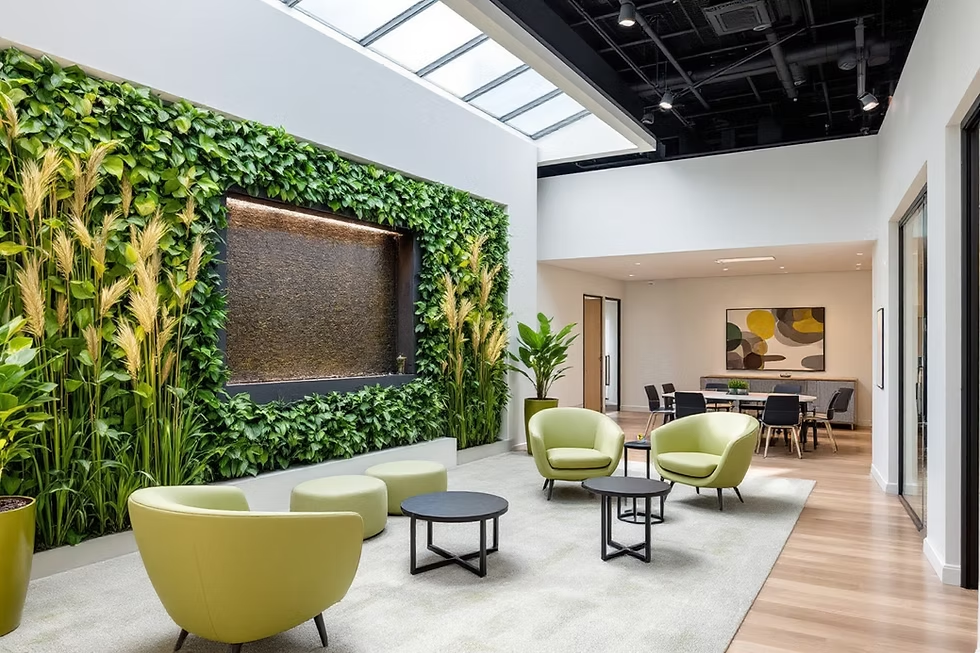
In the world of “nesting,” we often focus on the tangible: the thread count of our sheets, the speed of our Wi-Fi, or the efficiency of our kitchen appliances. But there is an invisible element of home design that has a profound impact on our blood pressure, our focus, and our overall happiness. It’s called Biophilic Design.
The term sounds technical, but the concept is ancient. “Biophilia” literally means a “love of living things.” Biophilic design is the practice of connecting our modern, indoor-dwelling selves with the natural world. In 2026, as our lives become increasingly digital and “plastic,” bringing the outdoors in isn’t just an aesthetic choice—it’s a biological necessity.
Here is the science behind why your home needs more greenery and how you can implement biophilic principles into your nest today.
1. The “Attention Restoration” Theory
Have you ever noticed that after staring at a screen for four hours, your brain feels “foggy”? This is called directed attention fatigue. According to environmental psychologists, urban environments and digital screens demand a lot of “hard” focus, which drains our mental energy.
Nature, on the other hand, provides “soft fascination.”
-
The Science: Looking at a plant, or even the fractal patterns in a leaf, allows our brains to rest while still being engaged. This is known as Attention Restoration Theory (ART).
-
The Nesting Tip: Place a small plant, like a Succulent or a Miniature Fern, directly in your line of sight on your desk. Every 20 minutes, look at the plant for 30 seconds. It acts as a “reset button” for your focus.
2. Plants as Natural Stress-Reducers
It’s not just in your head—being around plants actually changes your body chemistry. A study published in the Journal of Physiological Anthropology found that active interaction with indoor plants (like repotting or pruning) can reduce physiological and psychological stress compared to mental tasks.
-
The Science: Being near greenery suppresses sympathetic nervous system activity (your “fight or flight” response) and lowers diastolic blood pressure.
-
The Nesting Tip: If you have a high-stress corner of your home—perhaps where you pay bills or deal with difficult emails—”shield” that area with taller plants like a Fiddle Leaf Fig or a Bird of Paradise. The visual barrier of green creates a psychological “safe zone.”
3. The Humidity and Air Quality Connection
Modern homes, especially those with central heating and AC, often have very dry air. This can lead to dry skin, irritated sinuses, and a higher susceptibility to respiratory issues.
-
The Science: Plants undergo a process called transpiration. They “breathe” out moisture through their leaves, naturally increasing the humidity of a room.
-
The Nesting Tip: Grouping plants together creates a “microclimate.” If you have a cluster of plants in a corner, they work together to humidify the air more effectively than a single plant alone. This is particularly useful in bedrooms where dry air can ruin a good night’s sleep.
4. Fractals: Nature’s Secret Geometry
One of the most fascinating parts of biophilic design is the use of fractals. Fractals are complex patterns that look the same at every scale (think of a fern leaf or the head of Romanesco broccoli).
-
The Science: The human eye is evolved to process these specific patterns easily. Research shows that looking at fractals can reduce stress by up to 60%.
-
The Nesting Tip: You don’t have to turn your home into a jungle to benefit. Even using wallpaper with leaf patterns or placing a Spider Plant (which has beautiful, cascading fractal-like leaves) in a hanging basket can trigger this relaxation response.
Biophilic Design: Quick Implementation Guide
| Feature | Effort Level | Primary Benefit | Best Plant Match |
| Visual Connection | Low | Reduced Anxiety | Pothos, Snake Plant |
| Air Purification | Medium | Better Respiratory Health | Peace Lily, Boston Fern |
| Fractal Patterns | Low | Mental Clarity | Spider Plant, Succulents |
| Hands-on Care | Medium | Stress Recovery | Bonsai, Herb Garden |
5. Maximizing Natural Light
Biophilic design isn’t just about the plants; it’s about the light that feeds them. Sunlight regulates our circadian rhythms (as we discussed in our Smart Lighting guide), but it also changes the way we perceive the greenery in our homes.
-
The Science: Natural light boosts Vitamin D and serotonin levels. When combined with the green color spectrum of plants, it creates a “biophilic harmony” that makes a space feel vibrant and alive rather than static and stale.
-
The Nesting Tip: Use “sheer” curtains instead of heavy blinds. This allows enough light for your plants to thrive while softening the glare for you, creating a dappled light effect that mimics a forest canopy.
6. Integrating Natural Textures
To truly master the biophilic “nest,” look beyond the pots. Pair your greenery with natural materials like wood, stone, and jute.
-
Why it works: These textures reinforce the “outdoor” connection. A plastic pot on a glass table feels “artificial,” but a terracotta pot on a wooden shelf feels “grounded.” This sensory consistency helps the brain fully relax into the environment.
Final Thoughts
Biophilic design is a reminder that we are part of the natural world, even when we’re inside our homes. By adding greenery, you aren’t just decorating; you’re “bio-hacking” your environment for better health and more peaceful living.
Start small with one “un-killable” plant and see how the energy of your room shifts. You might find that the best part of your nest is the part that grows.
Leave a Reply