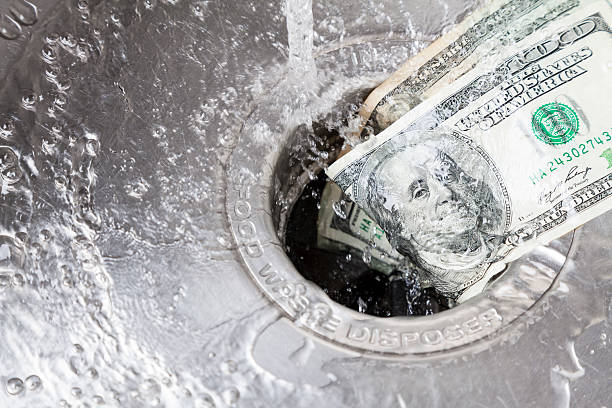
When we talk about saving money at home, we usually focus on the “big” things—the electricity bill, the mortgage, or the skyrocketing cost of groceries. Water often feels like an afterthought. It’s cheap until it isn’t. But if you’ve noticed your water bill creeping up month after month, you’re likely witnessing a “death by a thousand drips.”
I remember the first time I actually sat down and looked at my water usage. I realized I was paying for hundreds of gallons of water that I wasn’t even using. It was literally disappearing down the drain through old, inefficient fixtures and “silent” leaks.
The good news? You don’t need to rip out your plumbing or stop taking showers to see a massive drop in your bill. By swapping out a few key fixtures—most of which you can install yourself with a simple wrench—you can reduce your indoor water consumption by 20% to 50%.
Here is a professional, homeowner-to-homeowner guide on the fixtures that actually move the needle.
1. The Low-Flow Showerhead (The Easiest Win)
The shower is the third-largest water user in the average home. Older showerheads are “water hogs,” often pumping out 5.0 gallons per minute (gpm). If you take a ten-minute shower, you’ve just sent 50 gallons of treated, heated water into the sewer.
Modern High-Efficiency (Low-Flow) Showerheads are a marvel of engineering. They use air-induction or specialized spray patterns to make 1.5 or 1.8 gpm feel just as powerful as your old one.
-
The ROI: A family of four can save about 11,000 gallons of water a year by making this switch.
-
The Pro Tip: Look for the “WaterSense” label. This is a certification from the EPA that ensures the fixture meets strict efficiency and performance standards. It means you won’t feel like you’re being “spat on” by a weak stream.
2. Faucet Aerators: The 99-Cent Secret
If your kitchen or bathroom faucet comes out in a heavy, splashing stream, you’re wasting water every time you wash your hands or rinse a dish.
An aerator is that tiny mesh screw-on piece at the tip of your faucet. It mixes air into the water stream. This maintains the pressure while using significantly less water.
-
The Upgrade: Most old faucets have a flow rate of 2.2 gpm. You can buy a high-efficiency aerator (1.0 to 1.5 gpm) for about $5.00 at any hardware store.
-
The DIY: You usually don’t even need tools. Just unscrew the old one by hand and screw the new one on. It’s the highest return-on-investment project in your entire house.
3. The “Silent” Thief: Dual-Flush Toilet Converters
Toilets account for nearly 30% of an average home’s indoor water use. If you have a toilet made before 1994, it might be using 3.5 to 5.0 gallons per flush (gpf). Modern toilets use only 1.28 gpf.
But you don’t necessarily have to buy a whole new toilet.
-
The Conversion Kit: You can buy a dual-flush converter kit for about $30. This replaces the standard “flapper” inside your tank. It gives you two buttons: one for a “half-flush” (for liquids) and one for a “full-flush” (for solids).
-
The Leak Test: While you’re in there, do the Dye Test. Drop a few drops of food colouring into the tank. If the colour shows up in the bowl after 15 minutes without flushing, you have a leak. Replacing a $5 flapper can save you 200 gallons of water a day.
4. Smart Leak Detectors
This is the only “techy” item on the list, but it’s a lifesaver for your bank account. A smart leak detector is a small sensor you place near water-heavy appliances like the washing machine or water heater.
If a pipe cracks or a hose fails, the sensor alerts your phone immediately.
-
Why it matters: Most water bill spikes aren’t caused by long showers; they’re caused by a pipe leaking behind a wall or a toilet that doesn’t stop running. Catching a leak in hour one instead of day thirty can save you hundreds of dollars in both water costs and home repairs.
Potential Savings at a Glance
| Fixture | Old Usage | New Usage | Annual Water Savings |
| Showerhead | 2.5 – 5.0 gpm | 1.5 – 1.8 gpm | ~11,000 Gallons |
| Bathroom Faucet | 2.2 gpm | 1.0 – 1.5 gpm | ~700 Gallons |
| Standard Toilet | 3.5 gpf | 1.28 gpf | ~13,000 Gallons |
| Kitchen Aerator | 2.5 gpm | 1.5 gpm | ~1,000 Gallons |
5. Pressure-Regulating Valves (PRV)
Have you ever noticed that your pipes “clank” when the water turns off? Or is your shower pressure so high it actually hurts? You might have too much water pressure coming from the city line.
High pressure (above 80 psi) doesn’t just waste water; it destroys your fixtures, causes leaks, and wears out your water heater.
-
The Fix: If your home doesn’t have one, have a plumber install a Pressure-Regulating Valve. Keeping your home’s pressure between 50 and 60 psi ensures your “low-flow” fixtures actually stay low-flow and protects your plumbing for the long haul.
6. The “Hot Water” Loop (Recirculation Pumps)
Think about how much water you let run down the drain while you’re waiting for it to get hot. In some houses, that can be 2-3 gallons every single time you want to wash your hands or shower.
A Hot Water Recirculation Pump keeps hot water constantly moving through your pipes so it’s “instantly” available at the tap.
-
The Benefit: It stops the “wait-and-waste” cycle. While there is a small electrical cost to run the pump, the water savings are massive, especially in larger homes.
Final Thoughts: Stewardship and Savings
Reducing your water bill isn’t about making radical sacrifices. It’s about stewardship. By upgrading these simple fixtures, you’re making your home run more efficiently and ensuring you aren’t paying for resources that are literally going to waste.
When I finished my first round of fixture upgrades, my bill dropped by $35 a month. That might not seem like a fortune, but over a year, that’s over $400 back in my pocket—enough to pay for the upgrades ten times over.
Start with the showerhead. It’s a ten-minute job that pays for itself in weeks. Your wallet (and the planet) will thank you.
Leave a Reply