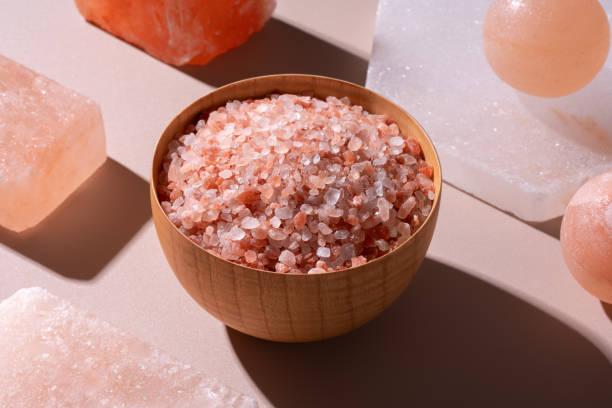
There is something undeniably magnetic about a Himalayan salt lamp. I remember walking into a friend’s home a few years back, and in the corner of her darkened living room, there was this warm, pulsating, amber glow. It didn’t look like a standard lightbulb; it looked like a piece of the earth—rugged, organic, and strangely alive. She told me it was “the best thing she’d ever bought for her health,” claiming it cleaned the air and eased her anxiety.
At the time, I was skeptical. I’ve always been the type of person who needs to see the proof before I buy into the hype. I’ve seen these lamps everywhere, from high-end wellness boutiques to the clearance aisle of my local pharmacy. But are they actually the “wellness miracle” the packaging claims they are, or are they just a very effective piece of mood lighting?
After doing a deep dive into the research, I found that the answer is—unsurprisingly—somewhere in the middle. If you’re considering adding one to your home, here is the professional breakdown of the marketing versus the reality.
The Marketing: What They Claim to Do
If you read the box of a typical Himalayan salt lamp, the claims are bold. They aren’t just sold as lamps; they are sold as “health devices.” The marketing copy usually hinges on three major promises:
-
The Ionization Theory: Proponents claim that as the lamp heats up, it releases “negative ions” into the air. They argue these ions attach to positive ions (like dust, pollen, and allergens), causing them to fall to the ground and “purify” the air.
-
Mood and Stress Relief: The marketing suggests that the negative ions boost blood flow and serotonin levels, helping to combat depression and anxiety.
-
Radiation Reduction: Some brands go as far as to claim that the lamps can neutralize the electromagnetic fields (EMFs) emitted by our computers and smartphones.
It sounds like a perfect solution, doesn’t it? A natural, beautiful rock that cleans your air and protects you from radiation. But does the science back this up?
The Reality: The Science Doesn’t Quite Match the Hype
As a homeowner who values evidence-based health, I had to be honest about the data. When I started digging into peer-reviewed research, I couldn’t find a single reputable study confirming that heated salt lamps release enough negative ions to meaningfully impact air quality.
1. The Ionization Myth
Salt is hygroscopic—meaning it attracts moisture from the air. When the bulb inside the lamp heats up the salt, the moisture evaporates. While this is a neat physical process, there is no scientific evidence that this cycle generates a significant number of negative ions. To generate enough ions to actually “clean” a room, you would need a massive, industrial-grade ionizer, not a small, fist-sized rock.
2. The Radiation Claim
The claim that these lamps can neutralize EMFs from your Wi-Fi or laptop is essentially fiction. Radiation (specifically non-ionizing radiation from electronics) travels in waves. A rock sitting three feet away on your desk cannot “soak up” these waves like a sponge.
The “Real” Benefits: Why I Still Keep One
So, if they don’t clean the air or block radiation, why am I still writing about them? Why do they stay in my living room?
Because there is a massive difference between health efficacy and psychological well-being. Even without the “negative ion” magic, a Himalayan salt lamp has legitimate, proven benefits for your home environment.
1. The Power of Color Temperature
We live in an age of “Blue Light” overload. From our phones to our overhead LED office lights, we are constantly bathed in high-energy, cool-toned light that signals to our brain that it is “high noon.” This inhibits melatonin and wrecks our sleep.
The glow of a Himalayan salt lamp is strictly within the warm, amber spectrum (often around 2000K to 2500K). This light does not interfere with your circadian rhythm. Using these lamps in the hour before bed creates a “transition” for your brain, signaling that it is time to wind down. That is not marketing; that is basic biology.
2. The Aesthetic and The “Biophilic” Effect
Humans are naturally drawn to organic, natural textures. A living room filled with plastic and sharp, geometric edges can feel cold and clinical. A salt lamp, with its jagged, hand-carved surface and natural mineral inclusions, adds a “biophilic” element to your home. Biophilic design—the practice of incorporating natural elements into interior spaces—is scientifically proven to lower cortisol levels and induce a sense of calm.
3. The “Focus” Anchor
Many writers, creators, and professionals use these lamps as a “focus anchor.” There is something about the soft glow that encourages a slower, more deliberate pace of thought. It acts as a visual cue that it is time to stop “scrolling” and start “creating.”
Comparison: Health Claim vs. Reality
| Claim | Scientific Consensus | Why It Still Matters |
| Air Purification | None | They are beautiful decor pieces that improve the room’s “feel.” |
| Negative Ionization | Negligible | The warm light quality is excellent for evening relaxation. |
| EMF Neutralization | None | They add an organic, natural texture to your workspace. |
| Anxiety Reduction | Proven (via light therapy) | The amber glow helps regulate your sleep-wake cycle. |
How to Avoid the “Fake” Lamp Trap
If you’ve decided to buy one for the aesthetic and the light quality, you need to be careful. Because these lamps have become so popular, the market is flooded with fakes. You don’t want to pay $50 for a piece of dyed glass or plastic.
-
Check the Weight and Feel: Real salt is dense. If the lamp feels light or hollow, it’s likely plastic or glass. Real Himalayan salt has a “stone-like” weight.
-
Sensitivity to Humidity: Since real salt is hygroscopic, a genuine lamp will actually “sweat” if your home is humid. If it sits in a damp room and doesn’t get slightly tacky to the touch, it’s not real rock salt.
-
The “Uneven” Light Test: Shine a bright flashlight through the lamp. A real Himalayan salt lamp will have an uneven glow, with some parts darker than others due to the natural mineral veins. If it glows perfectly evenly like a factory-made lightbulb, it is likely a fake.
-
The Price: If it’s $10, it’s probably a fake. Authentic, hand-carved salt requires mining, shipping, and processing. You generally get what you pay for.
Maintenance and Safety: A Professional Warning
Before you plug it in, there is one thing you must do. Look at the electrical cord.
A massive amount of cheap salt lamps are sold with sub-par wiring and plugs. Because the salt is heavy, it can put stress on the cord if it’s not handled well.
-
Check the Wiring: Make sure the cord is UL-listed (or the equivalent safety standard for your country). If it looks like a cheap, thin wire from an unknown manufacturer, replace it. You can buy a high-quality replacement cord set for $10 at any hardware store.
-
The Base: Ensure the lamp is sitting on a stable base that won’t tip over. Salt can be brittle; if it falls on a hardwood floor, it can crack the floor or the lamp.
-
Use a Coaster: Because the salt absorbs moisture, the base can sometimes become slightly damp. Always place the lamp on a coaster or a small tray to protect your furniture from potential mineral damage.
Final Thoughts: The Value of Ambiance
Don’t buy a Himalayan salt lamp because you think it’s going to “detox” your room or cure your allergies. If you want to clean your air, buy a high-quality HEPA filter. If you want to stop radiation, just put your phone in another room.
Buy a Himalayan salt lamp because you want to change the vibe of your home. Buy it because you want a light source that doesn’t feel like a hospital room. Buy it because, after a long day of staring at spreadsheets and bright blue screens, there is something profoundly grounding about sitting in a soft, orange, earth-born glow.
In a world that is obsessed with “optimizing” our health, sometimes the most “healthy” thing we can do is just to dim the lights, slow down, and create a space that feels a little bit more like home.
Have you ever owned a salt lamp, and did you feel like it changed the “mood” of your room? Drop a comment below—I’d love to hear if you think it’s a “must-have” or just another piece of decor.
Leave a Reply