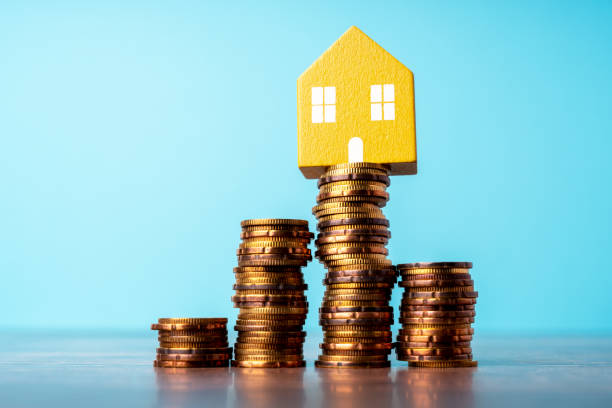
I will never forget the overwhelming sense of victory I felt the day I signed the closing papers on my first house. My hand was cramped from signing my name fifty times, but I walked out of that title office feeling like a financial genius. I had meticulously calculated my mortgage, property taxes, and insurance down to the exact penny. I knew exactly what was leaving my checking account on the first of every month. I thought my budget was bulletproof.
Then came the third week of homeownership.
I woke up on a Saturday morning to the sound of rushing water. A pipe had burst beneath the kitchen sink, flooding the hardwood floors. A frantic call to an emergency plumber, a $400 invoice, and a weekend spent running a rented industrial dehumidifier later, my “bulletproof” budget was in shambles.
When we talk about the financial reality of homeownership, we almost exclusively talk about the entry fees: the down payment, the interest rate, and the closing costs. But the reality is that the mortgage is just the baseline. It is the minimum required payment to keep the bank from taking the keys back. The true cost of owning a home is a sprawling, often unpredictable web of hidden expenses that can turn your dream home into a financial nightmare if you aren’t prepared.
If you are a first-time buyer, or a current owner tired of feeling “house poor,” here is the professional, human-to-human guide on the hidden costs of homeownership, and exactly how to budget for them so you can actually enjoy the roof over your head.
1. The Maintenance “Sinking Fund” Reality
When you rent an apartment, your landlord subsidizes the degradation of the building. If the refrigerator dies, you make a phone call. When you own the house, you are the landlord.
The most common financial advice is to set aside 1% to 2% of your home’s purchase price every year for maintenance. On a $400,000 home, that is $4,000 to $8,000 a year. But here is where people get tripped up: you won’t necessarily spend $4,000 every single year. You might spend $300 fixing a running toilet one year, and then $12,000 replacing the HVAC system the next.
-
The Budget Strategy: You need a Sinking Fund. Do not keep your maintenance money in your primary checking account. Open a dedicated High-Yield Savings Account (HYSA) labeled “House Maintenance.” Set up an automatic transfer every time you get paid. If you aim for $4,000 a year, automate a transfer of about $150 every two weeks. When the water heater eventually gives out, it is no longer a financial emergency; it is simply a math equation you have already solved.
2. The Property Tax Reassessment Trap
This is the hidden cost that catches almost every single first-time homebuyer off guard.
When you look at a real estate listing, the estimated monthly payment usually includes the property taxes. However, that tax figure is based on what the previous owner paid. If they owned the house for twenty years, their taxes were likely capped or based on an outdated, much lower assessment of the home’s value.
-
The Hidden Hit: The year after you purchase the home, your county will reassess the property based on the new purchase price. Your property taxes will almost certainly shoot up. When your escrow account falls short, your mortgage servicer will increase your monthly payment to cover the difference. I have seen homeowners hit with a sudden $300 increase in their monthly mortgage payment because of this.
-
The Budget Strategy: Call your local county tax assessor before you buy. Ask them to estimate the property taxes based on your actual purchase price, not the historical data. Budget for that higher number from day one.
3. Utility “Sticker Shock”
Moving from a 900-square-foot apartment to a 2,000-square-foot house is an incredible upgrade in lifestyle, but it is also a massive upgrade in volume. You are now heating and cooling more than double the space. Furthermore, a house has four exterior walls and a roof exposed to the elements, making it far less insulated than an apartment sandwiched between other units.
-
The Extras: Beyond the electric and gas bills, you are now entirely responsible for municipal services. Water, sewer, and trash collection are rarely included in a mortgage, and in many municipalities, these are billed quarterly. Getting a surprise $400 water and sewer bill every three months can derail a tight monthly budget.
-
The Budget Strategy: Ask the sellers for a 12-month history of their utility bills during the negotiation process. Once you move in, contact your utility providers and ask to be placed on “Budget Billing” or “Levelized Billing.” This averages out your annual usage into twelve predictable monthly payments, completely eliminating the shock of a $500 heating bill in January.
4. The “Curb Appeal” and Equipment Tax
When you buy a house, you aren’t just buying the structure; you are buying the land it sits on. Maintaining that land requires an entire arsenal of equipment you likely didn’t need as a renter.
A lawnmower, a weed trimmer, a snow shovel, a sturdy ladder, a heavy-duty garden hose, and basic hand tools will easily cost you over $1,000 in your first year. If you decide to outsource the work, a basic landscaping service can run $150 to $250 a month during the growing season.
-
The Budget Strategy: Create a “New Home Startup Fund” separate from your down payment. Aim to have $2,000 saved specifically for the hardware store runs that will inevitably happen during your first three months. Buy your heavy equipment (like lawnmowers and snowblowers) gently used on local marketplaces to cut those initial costs in half.
5. Preventative Pest and Systems Control
When you own the dirt, you own the bugs that live in it. Depending on your region, paying for preventative pest control is a non-negotiable expense.
A termite bond—a contract with a pest control company to monitor and treat your home for wood-destroying insects—can cost between $300 and $600 a year. Similarly, having a professional service your HVAC system every spring and fall will cost about $150 a year.
-
The Hidden Reality: Skipping these costs feels like saving money, but it is actually a massive financial risk. Termite damage is rarely covered by standard homeowners insurance, and a neglected furnace will burn out five years earlier than a maintained one.
-
The Budget Strategy: Treat these annual service contracts as fixed monthly bills. Divide the $600 annual cost by twelve, and build a $50 line item into your monthly budget for “Preventative Care.”
6. The “Scope Creep” of Cosmetic Upgrades
This is the psychological hidden cost of homeownership. You buy the house telling yourself, “The kitchen is fine, we can live with the oak cabinets.” But after a month of living there, the cabinets start to bother you. So, you decide to paint them. Once the cabinets are painted a crisp white, the old beige countertops look terrible by comparison. So, you replace the countertops. But now, the original flooring looks dingy.
This is known as the “Diderot Effect”—where acquiring or upgrading one new thing creates a spiral of consumption to make everything else match. It is the number one reason new homeowners rack up credit card debt.
-
The Budget Strategy: Implement the “Six Month Freeze Rule.” Unless an issue is a structural or safety hazard, commit to making zero cosmetic changes for your first six months in the house. You need to live in a space through different seasons to understand how it functions before you start tearing it apart.
Final Thoughts: The Reward of Readiness
Reading through a list of expenses like this can feel daunting. It is easy to look at the broken garbage disposals, the property tax hikes, and the landscaping costs and wonder if renting wasn’t the better deal after all.
But here is the professional truth: the stress of homeownership does not come from the expenses themselves. The stress comes from being surprised by them.
When you anticipate the broken water heater, plan for the tax reassessment, and build a sinking fund that covers the inevitable hardware store runs, these hidden costs stop being financial crises. They simply become routine math problems.
Renting offers a ceiling on your expenses, but it also offers a ceiling on your financial growth. When you own a home, every dollar you put into the mortgage is building your personal equity. By budgeting proactively for the hidden costs, you are protecting that investment. You shift the power dynamic. You stop reacting to your house, and you start managing it.
That is the moment when a house truly stops feeling like a liability, and finally starts feeling like a home.
Take Action Today
The best way to prepare for the unexpected is to learn from those who have already navigated it.
If you are already a homeowner, what was the biggest “hidden cost” that took you by surprise during your first year? Drop your story in the comments below—your experience might just save a first-time buyer from making a massive financial mistake!
Leave a Reply