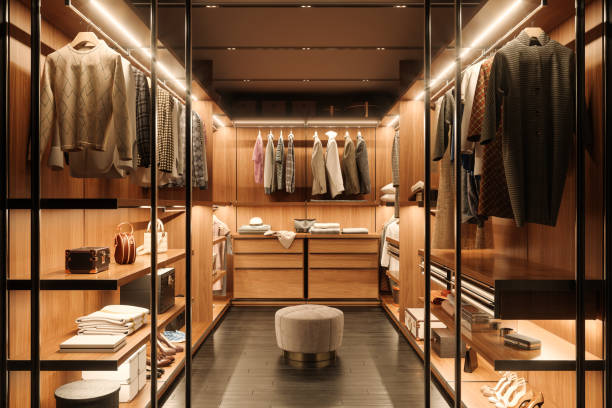
I remember staring into my closet at 7:15 AM on a Tuesday, feeling a familiar, overwhelming wave of defeat. My closet was physically overflowing. Hangers were jammed together, sweaters were cascading off the top shelves, and shoes were piled in a chaotic mound on the floor. Yet, as I stared at literally hundreds of garments, the only thought echoing in my head was: I have absolutely nothing to wear.
I was suffering from severe decision fatigue. I was spending twenty minutes every morning trying on different outfits, leaving a trail of discarded clothes on my bed, and ultimately leaving the house feeling uncomfortable in whatever I had hastily thrown together. I was wasting time, I was wasting money on “fast fashion” trends I wore once, and I was starting every day in a state of stress.
Then, I discovered the concept of the capsule wardrobe, and it completely revolutionized how I view personal style and daily routines.
In the professional world, the most successful leaders often wear a variation of the same outfit every day. They do this to eliminate micro-decisions, reserving their cognitive energy for things that actually matter. A capsule wardrobe applies this executive strategy to your home. It is a curated collection of highly versatile, high-quality items that can be seamlessly mixed and matched.
If you are tired of a closet full of clothes but nothing to wear, here is your professional, 30-day blueprint to simplifying your wardrobe and reclaiming your mornings.
Week 1: The Ruthless Audit (Days 1-7)
You cannot organize your way out of excess. Before you can build a highly functional capsule, you have to face the reality of what you currently own.
-
The Blank Canvas: Dedicate a Saturday afternoon to this. Take every single piece of clothing out of your closet and drawers. Put it all on your bed. Your closet should be completely bare. Wipe down the shelves and vacuum the floor.
-
The “One-Year” Rule: Pick up every item. If you have not worn it in the last twelve months, it leaves the house. Do not keep the jeans you hope to fit into again someday. Do not keep the itchy sweater because it was expensive. You are holding onto guilt, not clothing.
-
The Three Piles: Sort the remaining clothes into three distinct piles:
-
Keep: You love it, it fits perfectly right now, and you wear it constantly.
-
Donate/Sell: It is in good condition but no longer serves your lifestyle.
-
Store: Seasonal items (like heavy winter coats or summer swimsuits) or sentimental pieces (like a wedding dress). Put these in airtight bins and get them out of your daily visual space.
-
Week 2: Defining Your Architecture (Days 8-14)
A successful capsule wardrobe is not a random assortment of minimalist clothing. It is a highly engineered system built around a specific color palette and your actual, daily lifestyle.
-
Establish Your Base Color: Choose one or two dark neutrals as your foundation. For most people, this is either Black or Navy. This color will dictate your shoes, belts, coats, and trousers. If your base is black, a navy blue pair of shoes is going to disrupt the mix-and-match system.
-
Select Your Core Neutrals: Add White, Cream, Gray, or Camel. These colors will make up your basic t-shirts, button-downs, and lightweight sweaters.
-
Add Your Accents: Pick two or three accent colors that look great on your skin tone (e.g., Olive Green, Burgundy, or Soft Blush). These will be your statement blouses, scarves, or dresses. By sticking to this strict palette, almost every top you own will magically match every bottom.
-
The Lifestyle Reality Check: Look at your calendar, not your fantasy life. If you work from home five days a week and hike on the weekends, your capsule should be heavily weighted toward high-quality loungewear and activewear, not stiff blazers and pencil skirts. Build the wardrobe for the life you actually live.
The ROI of a Capsule: Traditional Closet vs. Capsule Wardrobe
| Element | Traditional Closet | Capsule Wardrobe |
| Daily Prep Time | 15–20 minutes of trying on outfits. | 2–3 minutes (everything matches). |
| Financial Cost | High (constant impulse buying). | Low (infrequent, high-quality purchases). |
| Garment Quality | Cheap synthetics that wear out quickly. | Durable natural fibers built to last. |
| Mental Load | High decision fatigue and guilt. | Zero stress, high confidence. |
Week 3: Identifying Gaps and Upgrading Quality (Days 15-21)
Once you put your “Keep” pile back into the closet, you will likely notice a few holes. Perhaps you have great jeans but no high-quality t-shirts. Maybe you have beautiful blouses but your everyday sneakers are falling apart.
-
Write the “Missing” List: Do not go to the mall and browse. Write down the exact items you need to complete the system. Treat this like a professional procurement list. If you need a white linen button-down, you only shop for a white linen button-down.
-
The Natural Fiber Rule: Because you are reducing the number of clothes you own, the clothes you do keep will be worn and washed much more frequently. Fast-fashion polyester will pill and fall apart within a month. Shift your budget toward natural fibers. Look for 100% cotton, merino wool, linen, and silk. They breathe better, drape beautifully, and last for years if cared for properly.
-
The “One-In, One-Out” Policy: From this week forward, establish a hard boundary. If you buy a new sweater, an old sweater must be donated or sold. This is the only way to prevent your closet from slowly inflating back to its original, chaotic size.
Week 4: Building the “Uniforms” (Days 22-30)
Now that your closet only contains items you love, that fit, and that exist within a cohesive color palette, it is time to remove the final layer of morning friction.
-
The Power of the Uniform: Create three or four “go-to” outfit formulas. For example, your spring uniform might be: Straight-leg jeans + neutral t-shirt + tailored blazer + white sneakers. * Photograph the Combinations: Spend an hour mixing and matching your pieces. You will be shocked to find that 30 pieces of clothing can create over 60 distinct outfits when the colors are aligned. Take photos of your favorite combinations in the mirror and keep them in a dedicated folder on your phone. On mornings when you are exhausted or running late, simply open the folder, point, and wear.
Final Thoughts: The Luxury of Less
We have been conditioned by marketing to believe that wearing the same outfit twice in one week is a fashion faux pas. We are told that we need a different dress for every wedding, a different sweater for every holiday party, and a constantly rotating seasonal wardrobe.
This cycle is exhausting, expensive, and environmentally destructive.
Creating a capsule wardrobe is an act of rebellion against this cycle. It is a profound shift in mindset. When you open a closet that has room to breathe, where all the hangers match, and where every single garment makes you feel confident and comfortable, your entire morning changes.
You stop agonizing over your appearance and start focusing your energy on the day ahead. True style isn’t about having a closet full of clothes; it is about knowing exactly who you are, and dressing for that person with effortless precision.
Take Action Today
Open your closet right now and find the one item that still has the tags on it from a year ago, or the piece you constantly try on but always take off before leaving the house.
What is the item, and why are you holding onto it? Confess your ultimate “closet clutter” culprit in the comments below, and let’s start the purging process today!
Would you like me to help you map out a custom 30-piece capsule wardrobe checklist based on your specific workplace dress code and local climate?
Leave a Reply