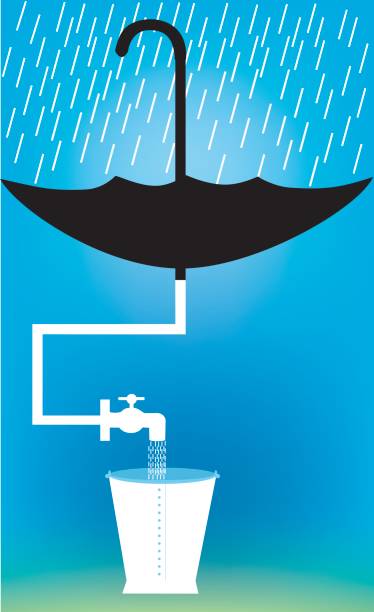
There is something uniquely satisfying about a heavy summer downpour when you know you’re prepared for it. For years, I watched thousands of gallons of water slide off my roof, race down the driveway, and disappear into the storm drain, while simultaneously paying a monthly utility bill to water my hydrangeas with treated, chlorinated municipal water. It felt like a fundamental error in logic.
Then, I built my first rainwater harvesting system.
It wasn’t a massive, engineering-grade project that required a degree in hydrology. It was a weekend project that utilized the existing architecture of my roof and downspouts. When you start harvesting rainwater, your relationship with your garden changes. You stop seeing a storm as an inconvenience and start seeing it as a resource. You’re collecting “liquid gold” that is chemically superior for your plants, free of charge, and fundamentally sustainable.
If you’re a homeowner looking to lower your water footprint and give your garden the best irrigation possible, here is a professional, human-to-human blueprint for building your own rainwater harvesting system.
1. The Professional Pre-Check: Ordinance and Physics
Before you buy a single bucket, we have to talk about two things: the law and the gravity.
-
Check Local Ordinances: I cannot emphasize this enough. In some states and municipalities, rainwater harvesting is strictly regulated. Some places offer tax rebates for collecting rain; others have outdated laws that limit how much you can catch. A quick search of your city’s website will save you from potential legal headaches.
-
The Power of Gravity: Rainwater harvesting works best when you let gravity do the work. Water is heavy—about 8.3 pounds per gallon. A full 50-gallon barrel weighs over 400 pounds. You need a sturdy, level foundation (cinder blocks or a dedicated platform) to elevate the barrel. This elevation is what creates the pressure to push water through your hose.
2. The Anatomy of a System
You don’t need to overcomplicate this. A professional-grade DIY system has four essential components:
-
The Catchment Area: Your roof.
-
The Conveyance: The gutters and downspouts.
-
The Diverter: This is the “pro” element that filters debris.
-
The Storage: The barrel or cistern itself.
3. Step-by-Step: The Build
Step 1: Site Preparation
Choose a downspout that is close to the garden area you want to irrigate. Clear the ground, make it level, and lay down your foundation. I prefer using concrete pavers or heavy-duty cinder blocks. Remember: once that barrel is full, you are not moving it. It needs to be rock solid.
Step 2: Preparing the Barrel
If you’re buying a pre-made rain barrel, it will likely have a spigot and an overflow valve already installed. If you are converting a food-grade drum, you’ll need to install a brass spigot at the bottom (about 6 inches from the base to allow for sediment to settle) and an overflow outlet near the top.
Step 3: The First Flush Diverter (The Pro Move)
This is where most DIYers fail. If you just shove the downspout into the top of the barrel, your garden will get a slurry of bird droppings, roof shingle grit, and dead leaves.
You need a First Flush Diverter. This is a simple pipe fitting that catches the first few gallons of rainfall—the “dirty” water that washes the roof clean—and diverts it away from your barrel. Only after that initial flush does the clean water start entering your storage tank. It’s an inexpensive piece of plumbing, but it keeps your water clean and your barrel sediment-free.
Step 4: Installation
Cut your downspout at the height of the diverter. Secure the diverter to the downspout using stainless steel screws. Connect your barrel to the diverter with a flexible hose. Ensure your overflow hose is directed away from your house foundation—you don’t want to create a swamp right next to your basement wall.
4. The “Garden Gold” Factor: Why Rainwater Wins
Why go through the effort of catching rain when you have a hose? The answer is simple: your plants prefer it.
-
No Chlorine: Municipal water is treated with chlorine or chloramine to keep it safe for human consumption. While fine for us, these chemicals can inhibit beneficial soil bacteria and stress sensitive plants. Rainwater is pure, soft, and naturally pH-balanced.
-
Nitrogen-Rich: Rainwater picks up trace amounts of nitrogen as it falls through the atmosphere. It’s nature’s way of “side-dressing” your garden with a gentle, organic fertilizer every time it pours.
-
Temperature Consistency: Watering a sensitive plant with ice-cold tap water on a hot day can cause “thermal shock.” Rainwater is always at ambient temperature, making it much gentler on the roots.
Comparison: Rainwater System vs. City Water
| Feature | City Water | Rainwater Harvesting |
| Cost | Per Gallon Fee | Free |
| Chemical Content | Contains Chlorine/Fluoride | Natural/Organic |
| Temperature | Often very cold | Ambient (Plant-safe) |
| Availability | Constant | Dependent on Weather |
| Stormwater Impact | Adds to Sewer Load | Reduces Runoff/Erosion |
5. Maintenance: The “Set and Forget” Fallacy
A rainwater system is not a “set and forget” device. If you neglect it, it will become a mosquito breeding ground or a clogged mess.
-
Mosquito Prevention: Mosquitoes need standing water to breed. Ensure your barrel lid is completely sealed and use fine-mesh window screening over any intake or overflow ports. If you do this, they cannot get in.
-
Sediment Management: Twice a year, drain your barrel completely and rinse it out. Even with a first-flush diverter, some grit will find its way in. A clean barrel is a healthy barrel.
-
Winterizing: This is critical if you live in a climate where the temperature drops below freezing. Water expands when it freezes. If you leave a full barrel in the winter, it will crack—or worse, burst. In late autumn, disconnect the diverter, drain the barrel completely, and store it upside down or inside.
6. Sizing Your System
How big should your setup be? It depends on your roof.
A general rule of thumb is that for every 1 inch of rain that falls on 1,000 square feet of roof, you can capture approximately 600 gallons of water.
Most suburban homes have roofs well over 1,000 square feet. If you live in a region that gets regular rainfall, even two 50-gallon barrels linked together can provide a massive amount of irrigation for your vegetable beds during dry spells.
7. The Professional Mindset: Stewardship
When you build a rainwater system, you’re doing more than just gardening. You are engaging in water stewardship. Stormwater runoff is a major issue in urban environments—it picks up oil from driveways and pesticides from lawns, dumping them into our waterways. By catching the rain, you are slowing down the flow, reducing erosion in your yard, and keeping our local creeks and streams cleaner.
It is a small, quiet action, but it’s one that ripples outward. You’re teaching your kids (or neighbors) that water is a precious resource, not an infinite commodity that flows out of a faucet at the turn of a handle.
Final Thoughts
Building a rainwater system is a rite of passage for the serious gardener. It’s the moment you stop being a consumer of resources and start becoming a manager of them. You’ll save money on your utility bill, your garden will respond with noticeably greener growth, and you’ll find yourself actually looking forward to a rainy afternoon.
Start small. You don’t need a 500-gallon cistern to start. Grab one barrel, a downspout kit, and a weekend. Your plants—and your water bill—will thank you for it.
Take Action Today
Are you ready to stop letting your roof runoff go to waste? I’ve put together a “Rainwater Calculator Worksheet” that helps you estimate exactly how many gallons you can catch based on the square footage of your roof and your local annual rainfall.
Leave a Reply