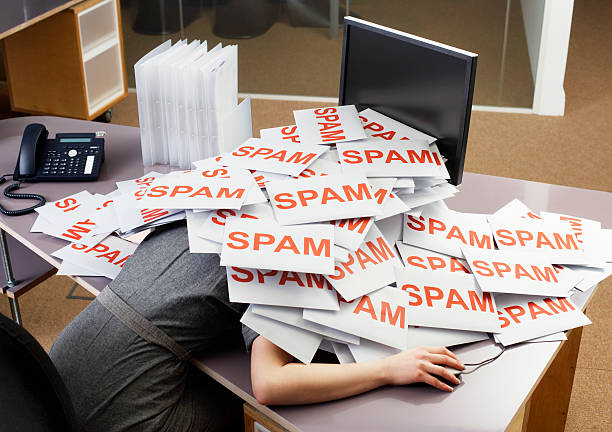
I remember the exact state of my kitchen counter a few years ago. It wasn’t being used for chopping vegetables or setting down groceries. It had become a paper graveyard.
There was the “urgent” pile, the “I should probably read this” pile, and the “I don’t know what this is but I’m afraid to throw it away” pile. Every time I walked past it, my blood pressure spiked just a little bit. That stack of mail wasn’t just paper; it was a physical representation of delayed decisions. It was the lease renewal I still needed to review and negotiate, the credit card statement I hadn’t reconciled, the market research for an upcoming salary negotiation that I had printed out and left sitting there.
It was exhausting. We often think of physical clutter as a housekeeping issue, but it is actually a massive drain on our cognitive energy. Every time your eyes scan a pile of unprocessed mail, your brain subconsciously runs through the entire list of tasks associated with those papers.
If you are tired of losing important documents, paying late fees because a bill got buried under a grocery store flyer, or simply feeling overwhelmed by the daily influx of paper, you do not need a complex filing system with color-coded tabs. You only need one professional, unbending principle: The One Touch Rule.
Here is how to implement this rule to permanently eliminate paperwork clutter and reclaim the mental whitespace in your home.
The Psychology of the “Doom Pile”
Before we fix the behavior, we have to understand why we create these paper mountains in the first place.
We don’t leave mail on the counter because we are lazy. We leave it there because processing it requires us to make a decision, and human beings suffer from severe decision fatigue. When you come home from a long day of work, the last thing you want to do is decide whether the pre-approved credit card offer should be shredded, recycled, or saved. So, you set it down. You tell yourself, “I’ll deal with this later.”
But “later” is not a time on the clock. “Later” is a magical fantasy land where we somehow have infinite energy and enthusiasm for administrative tasks.
Every time you pick up a piece of mail, look at it, and put it back down, you are multiplying your work. You are spending mental energy without getting any closer to a resolution.
What is the One Touch Rule?
The One Touch Rule is brilliantly simple: Once you pick up a piece of paper, you are not allowed to set it back down until you have made a final decision about its destination.
You cannot touch a piece of mail twice. You cannot open a letter, read it, and put it back on the dining room table. When the mail comes out of the mailbox, it enters a strict triage process. You have four—and only four—options for every single piece of paper.
Option 1: Toss or Shred (The 80% Rule)
The vast majority of the mail that enters your home is garbage. Catalogs you didn’t ask for, promotional flyers, and credit card offers make up about 80% of residential mail.
-
The Action: As soon as you walk through the door, walk directly to your recycling bin or shredder. Do not even set the stack down. Sort it in your hands. If it is junk, drop it in the bin immediately. If it has your personal identifying information on it, put it straight into the shredder.
Option 2: File (The Archival Documents)
There are some documents that require zero action but need to be kept for legal or financial reasons. This includes tax documents, updated insurance policies, or finalized medical records.
-
The Action: Do not put these in a “to file” basket. That is just another doom pile with a fancier name. Walk to your filing cabinet or fireproof safe and put the document in the correct folder right then and there. It takes exactly thirty seconds.
Option 3: Action (The “Needs Work” Category)
This is where people get stuck. What do you do with the papers that actually require you to do something? The property tax bill that needs to be paid, the wedding invitation that requires an RSVP, or the detailed contract you need to read over?
-
The Action: You place these items in a single, dedicated “Action Tray” or folder on your desk. However, there is a catch. Putting something in the Action Tray is only allowed if you have a scheduled, recurring time to empty that tray. (More on this below).
Option 4: Delegate
Sometimes the mail isn’t yours to deal with. It belongs to your spouse, your roommate, or your kids.
-
The Action: Hand it directly to them, or place it in a designated, personal inbox for that specific person. Once it is in their box, it is no longer your mental burden.
Setting Up Your “Processing Station”
To make the One Touch Rule work, you need to remove all the friction from the process. If your shredder is buried in the basement, you are never going to use it daily.
You need to set up a “Processing Station” as close to your front door as reasonably possible.
-
A Recycling Bin: For the shiny flyers and catalogs.
-
A Cross-Cut Shredder: For anything with an account number, a barcode, or your name and address.
-
An Action Tray: A single, shallow tray for the documents that require your time.
When you walk in the door, you stand at this station. You touch each envelope once. Recycle. Shred. Action. Recycle. File. The process takes less than two minutes, and the paper never even makes it to your kitchen counters.
The Secret to the “Action Tray” (Financial Fridays)
The One Touch Rule will fail if your Action Tray just becomes the new kitchen counter. To prevent this, you must pair the rule with a dedicated administrative block in your schedule.
I call this “Financial Friday,” but you can do it on Sunday morning or Tuesday evening—whatever fits your life.
Once a week, you sit down with your Action Tray. This is the only time you actually do the work. You log in to your bank and pay the bill. You fill out the RSVP card and put a stamp on it. You read through the fine print of that lease agreement and draft the email to your landlord asking for the terms you actually want.
Because you have already sorted the paper, you aren’t wasting your administrative time sifting through grocery store coupons. You sit down, execute the high-level tasks, empty the tray, and enjoy the rest of your week with zero lingering guilt.
Extending the Rule to Your Digital Life
The beauty of the One Touch Rule is that it is infinitely scalable. Once you master it with physical paper, you can apply it to your email inbox.
How many times do you open an email on your phone while waiting in line for coffee, read it, mark it as “unread,” and tell yourself you will reply later? You are touching the digital paper twice. You are forcing your brain to process the same information multiple times.
If an email takes less than two minutes to answer, answer it immediately. If it takes longer, move it to a “Requires Action” folder and deal with it during your dedicated weekly administrative block. If it’s a promotional newsletter you haven’t read in three months, unsubscribe and delete it. Touch it once, and move on.
Final Thoughts: Reclaiming Your Environment
Your home is supposed to be your sanctuary. It should be the place where you go to recover from the demands of the world, not a place that constantly reminds you of the chores you haven’t finished.
Paper clutter is insidious because it disguises itself as productivity. We think that by leaving a bill on the table where we can see it, we are being responsible. In reality, we are just using our physical environment as a poorly functioning external hard drive for our anxiety.
The One Touch Rule forces you to be decisive. It forces you to stop delaying the inevitable. It might feel rigid at first, but within a week, it will become an automatic reflex. You will walk into your kitchen, look at the completely clear, pristine countertops, and feel a profound sense of relief. You take back your space, and more importantly, you take back your peace of mind.
Take Action Today
The next time you check your mailbox, do not let that stack of envelopes make it past the entryway. Stand by your recycling bin and practice the rule.
What is the one type of paperwork that always seems to pile up in your house? Is it the catalogs, the medical bills, or the school forms? Let me know in the comments below, and let’s find a permanent solution to keep them off your counters!
Leave a Reply